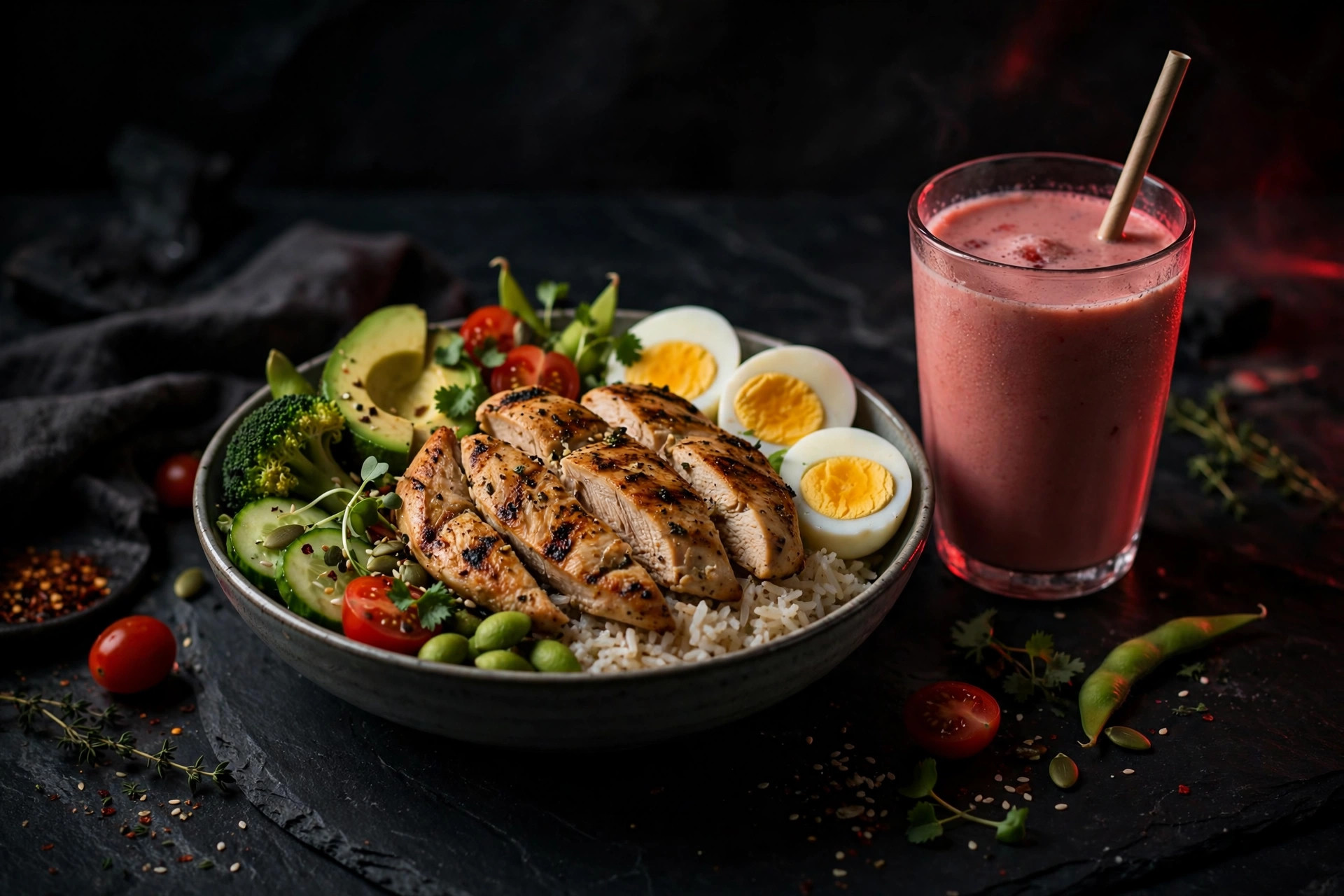
What you eat around your workout can help your energy, performance, and recovery — but it does not need to be stressful or complicated. Athletes were building muscle long before anyone sold a pre-workout shake. This guide explains what to eat before and after a workout, when timing actually matters, and what you can safely ignore.
The Big Picture First
Your total daily intake matters far more than the exact contents of one meal. If you hit your daily calories and protein, train hard, and sleep well, workout nutrition becomes a helpful bonus instead of a make-or-break factor. Think of pre- and post-workout meals as tuning, not the engine.
That said, eating smart around training does help. You will feel stronger during sessions, recover faster between them, and be less likely to crash halfway through a hard workout.
What to Eat Before a Workout
The goal before training is simple: arrive fueled, hydrated, and comfortable — not stuffed, and not running on empty.
The 2–3 Hour Meal
If you can eat two to three hours before training, have a normal balanced meal. This is the best window for a full plate of food because it gives your body time to digest.
Aim for:
- Protein: 25 to 40 grams to support muscle and start the day’s intake strong
- Carbohydrates: A solid serving — rice, potatoes, oats, pasta, or bread — to top up glycogen, your muscles’ fuel tank
- Fat and fiber: Moderate. Very fatty or high-fiber meals digest slowly and can sit heavy during squats or sprints
Examples of great 2–3 hour pre-workout meals:
- Grilled chicken, white rice, and cooked vegetables with a light sauce
- Ground turkey pasta with marinara and a side salad
- Eggs, toast, fruit, and a glass of milk — a classic early-morning option
- A turkey and cheese sandwich on a roll with a banana
- Greek yogurt, granola, and berries, plus a slice of toast with jam
The 30–60 Minute Snack
Training soon and need something quick? Choose fast-digesting carbs with a little protein, and keep fat and fiber low so it clears your stomach fast.
Good 30 to 60 minute snacks:
- A banana and a small whey protein shake
- White toast or a bagel with jam or honey
- A handful of pretzels and a low-fat chocolate milk
- Applesauce pouches or a fruit smoothie
- A small bowl of low-fiber cereal with skim milk
If you train first thing in the morning and cannot face food, a banana or shake is enough for most people. You do not need a full meal at 5 a.m. to train well.
Hydration: The Part Everyone Forgets
Even mild dehydration hurts strength, endurance, and focus. Drink about 16 to 20 ounces of water in the two hours before training, then sip during your workout. For sessions longer than an hour, or training in heat, add electrolytes — sodium matters most. A simple rule: if your urine is pale yellow, you are in decent shape; dark means drink more.
Caffeine, if you tolerate it, is a proven performance helper for many lifters. A coffee 30 to 60 minutes before training is plenty for most people. Skip it late in the day if it ruins your sleep — sleep matters more.
What to Eat After a Workout
After training, your goals shift to recovery: replace the fuel you burned, provide protein for repair, and rehydrate.
Protein After Training
Get a solid protein serving in your next meal: roughly 25 to 40 grams for most adults, or about 0.3 grams per kilogram of bodyweight. Quality sources include chicken, lean beef, fish, eggs, Greek yogurt, cottage cheese, whey protein, or tofu. Whey is convenient, not magical — a normal protein-rich meal does the same job.
Carbs After Training
Carbohydrates refill glycogen. This matters most if you train hard daily or do two sessions a day. For the average person training once a day, your normal meals will refill stores before the next workout. Still, including carbs in your post-workout meal speeds the process and helps you feel recovered sooner.
Solid post-workout meal examples:
- Salmon, sweet potato, and green beans
- Lean steak, rice, and a fruit salad
- Chicken burrito bowl with rice, beans, salsa, and cheese
- An omelet with potatoes, peppers, and a glass of milk
- A whey shake plus a bagel with peanut butter when time is tight
Fat After Training
Old advice said to avoid all fat after a workout. That is overstated. A normal amount of fat in a real meal will not meaningfully slow your progress. Just do not make your only post-workout meal an enormous, greasy feast if you also need quick energy for another session the same day.
Myths You Can Stop Worrying About
Myth 1: The 30-Minute Anabolic Window
The idea that you must slam protein within 30 minutes or waste your workout is mostly marketing. Research shows the real window is hours wide, especially if you ate protein earlier in the day. If your next meal is within one to three hours after training, you are fine. Total daily protein matters far more than stopwatch timing.
The exception: if you trained fully fasted, eating protein sooner rather than later is a sensible idea.
Myth 2: Fasted Training Burns More Muscle
Training on an empty stomach will not melt your muscle if your total daily protein and calories are in place. Some people love fasted morning sessions; others feel weak and perform worse. Since performance drives progress, choose the option that lets you train hardest. If fasted training makes your workouts suffer, eat the snack.
Myth 3: You Need Supplements to Recover
Protein powder, creatine, and electrolytes can be convenient tools. None of them replaces food, water, and sleep. Spend on groceries first.
A Simple Daily Template
- Train at 5 p.m.: Lunch at 2 p.m. (chicken, rice, vegetables), small snack at 4 p.m. if hungry (banana), train, dinner at 7 p.m. (beef, potatoes, salad, fruit).
- Train at 6 a.m.: Banana or shake at 5:30 a.m., train, proper breakfast at 7:30 a.m. (eggs, oats, berries, milk), then normal lunch and dinner.
Adjust portions to your goal: a bit more food when building muscle, a bit less when losing fat, protein high in both cases.
The Bottom Line
What to eat before and after a workout comes down to common sense. Eat a balanced meal two to three hours before, or a light carb-rich snack if time is short. After training, eat protein and carbs in a normal meal, rehydrate, and move on with your day. Do that consistently while hitting your daily totals, and your nutrition is working for you — not against you.
General fitness information only — not medical advice. Talk to a qualified professional before starting a new training or nutrition program if you have any health concerns.